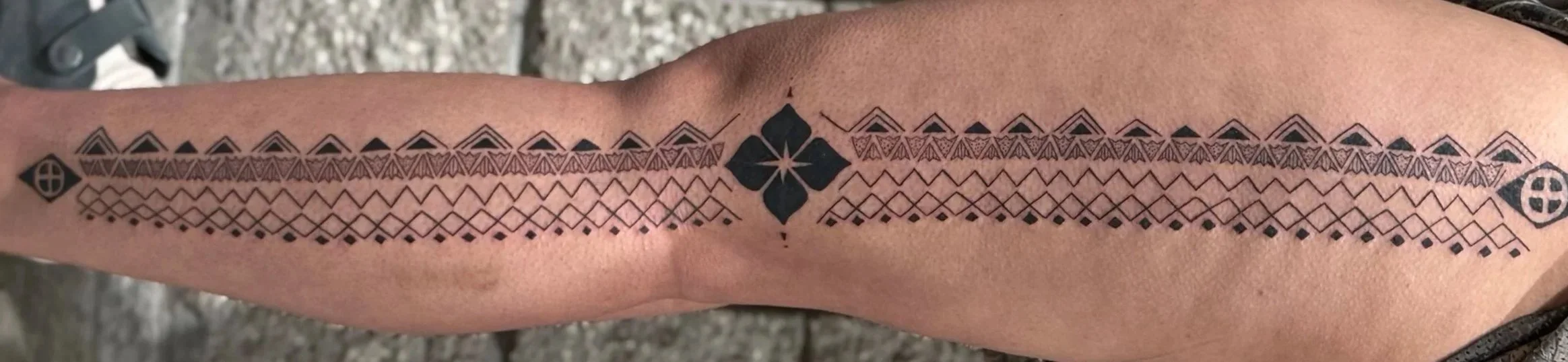
Palauan Tattoo
Cultural considerations
Before booking, please read about my approach to this culturally sensitive process.
Scroll down to find information such as my process, my ideology, and some Palauan tattoo history.
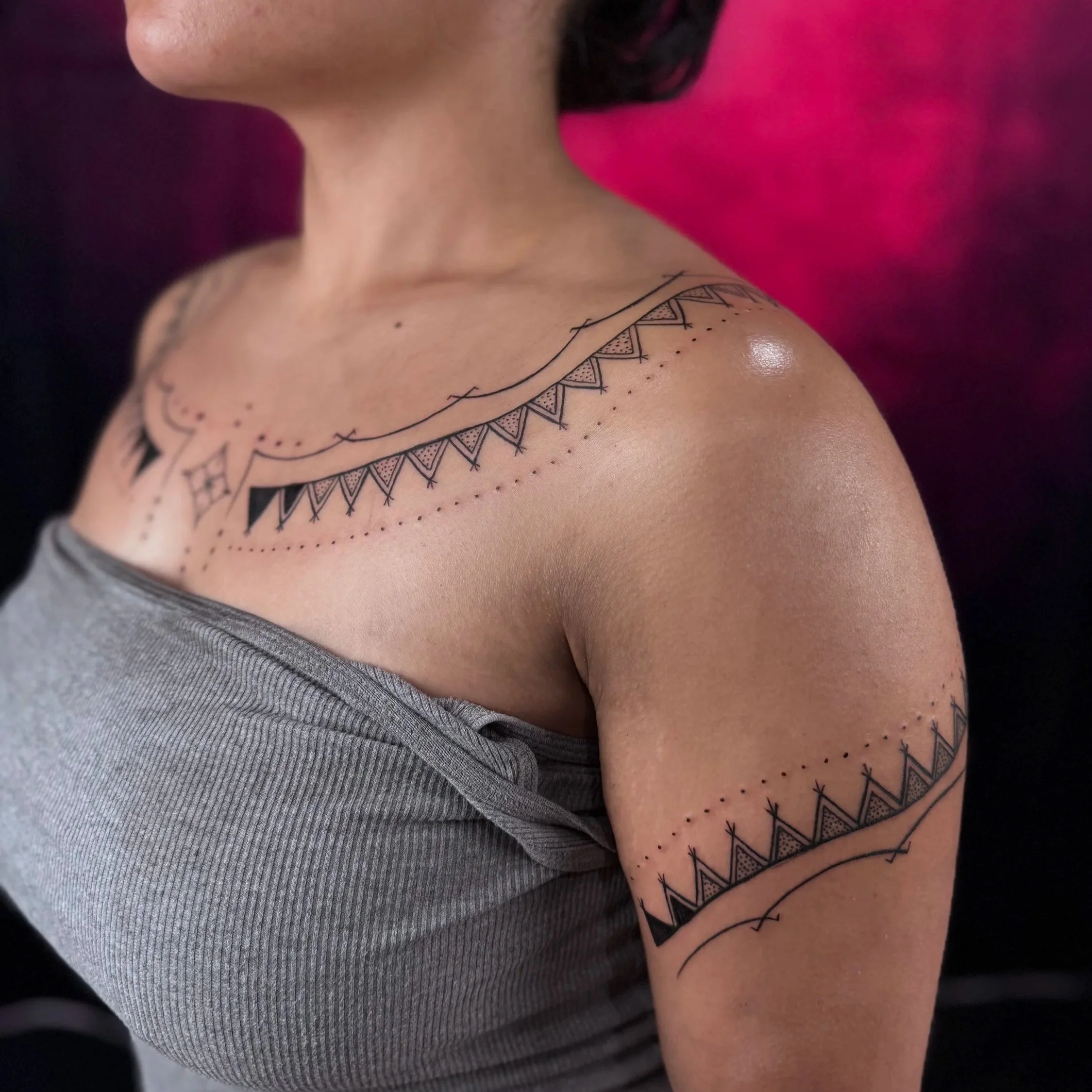
My experienceWhile I have 6 years of tattooing experience across diverse age groups, body types, and skin textures, culturally significant tattoos are newer territory for me. I've spent several years researching Palauan tattoo traditions through historical texts and community interviews, though much of this knowledge is held by elders and remains unrecorded. I continue seeking elders willing to share their knowledge, and until then, I work with the resources available to me.
The Process
You just submit your tattoo proposal, what happens next?
Meet + DiscussIn our virtual meeting, we will discuss and brainstorm ideas including familial history, cultural roots, and personal motivations.
ResearchAfter we speak, we will individually spend time researching the topics discussed to bring to our tattoo session.
Tattoo AppointmentOn the day of our appointment, we will draw directly on the body and weave together your patterns.
my Ideology
My perspective on tattoo revival continues to evolve alongside my growth as a researcher and artist. When asked about getting the most authentic traditional tattoo, my answer is simple: traditional tattoos, as they once were, are no longer fully accessible to us. Colonialism severed the line of tattooists, and with it, the lived knowledge of the practice. That said, we can still engage in tattooing with a cultural lens and indigenous connection.
Attempting to replicate traditional tattoos without the same lived experiences would itself be inauthentic. Instead, my hope is that the art evolves naturally with its people. Much like oral tradition, no two people tell a story the same way. In my opinion there is nothing more natural than the evolution of practices with its people.
I ask that anyone seeking a Palauan tattoo reflect on what draws them to it, and how it connects them to their heritage.
My Approach
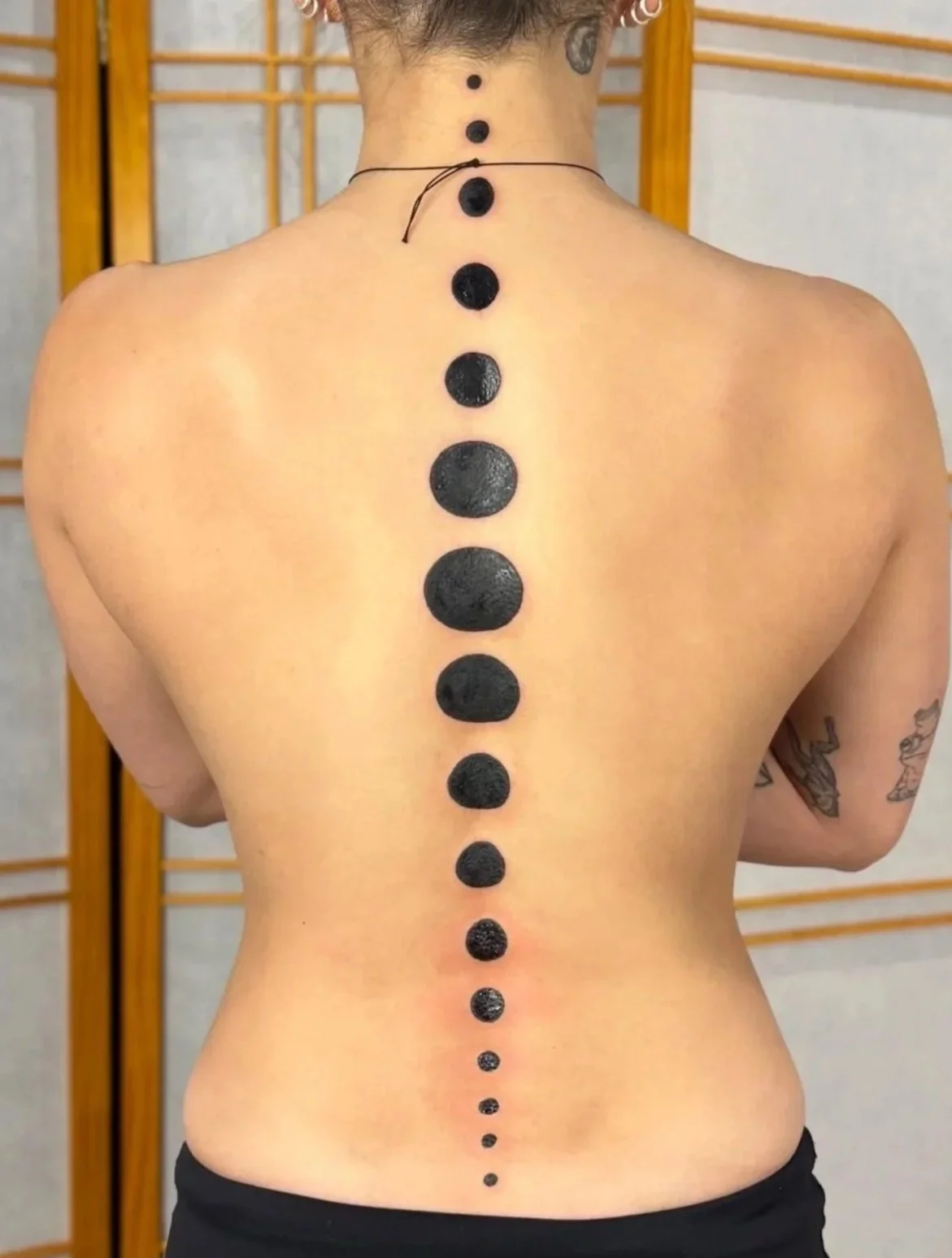
For traditionally inspired Palauan tattoos, designs are created in person at the start of your appointment. This process allows us to discuss what elements matter to you, where you are in your personal journey, and what familial ties connect you to your culture. Designs can draw from traditional motifs as well as imagery meaningful to you — photographs of tattooed ancestors, Bai paintings, carved heirlooms, decorated bowls, woven baskets, storyboard legends, and similar items.
Sharing information or photos before your appointment gives me time to research which motifs may be most appropriate for you. Please note that not all motifs and placements have been catalogued, and my own research is ongoing. My hope is that together we can create something that honors tradition while making space for something new.
Placements and methodology
Please note that the information provided here has been collected from multiple sources including expedition logs, early colonial accounts, interviews, and common day hearsay. If you believe any of the information to be inaccurate, I appreciate any and all feedback shared. My research has also included looking into customs throughout Micronesia, as well as into Melanesia and Polynesia for additional context.
Please note that the following is based on the biggest cluster of islands in Palau and its closest neighbors. The South-Western outliers have significant differences in approach and placements.
Tattoo placement and motifs varied based on several criteria including age, sex, and financial means.
Women
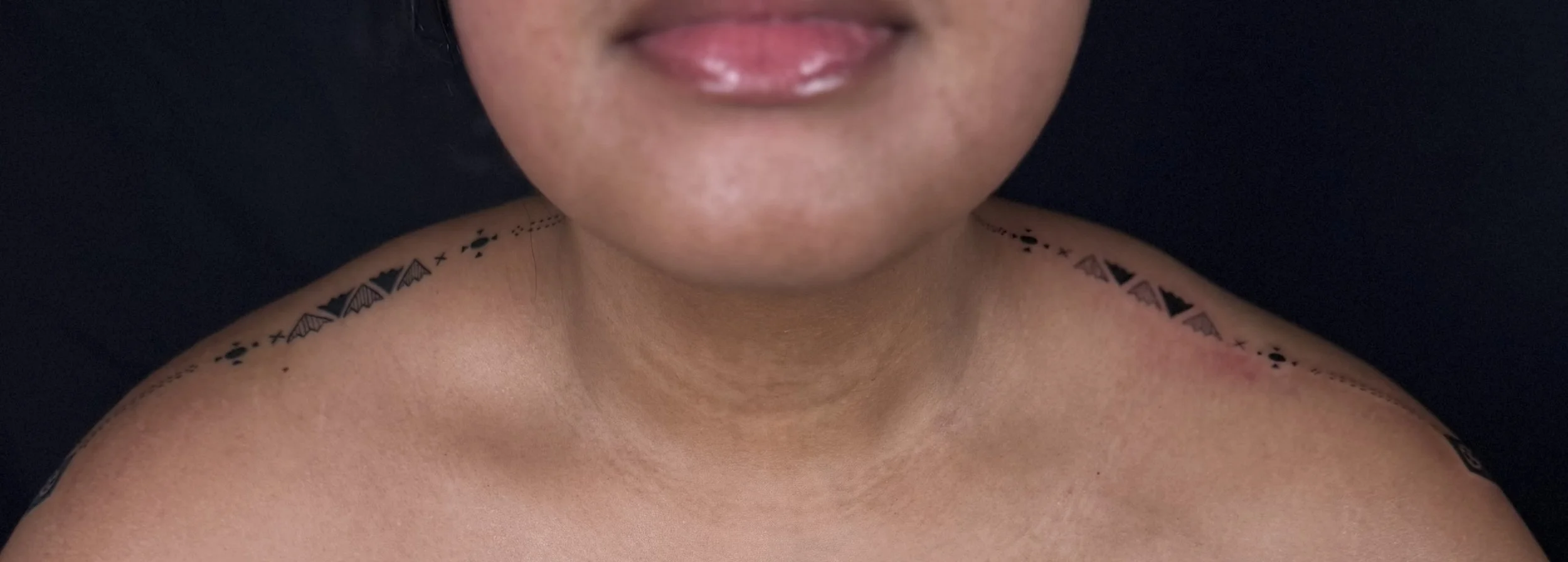
Women were widely considered the primary wearers of tattoo, beginning as early as childhood, with most tattoos starting at the onset of menstruation. Many accounts share that the fingers and hands were the first tattoos gained by young girls, though some say it began on the pubic area. Tattoos would progress from the fingers to the hand, wrist, forearm, and inner bicep. Some girls had one arm worked on at a time, while others started at the fingers on both hands and worked upward on each arm in tandem. Once the arms were complete, tattooing moved to the foot and ankle, working up the leg; covering all the way to the buttocks, and on some occasions blacking it out if one had the both the time and money.
While it seems that all girls were eligible for tattoos, not all could afford them. Access was largely determined by financial means, influence, or social standing. Tattoos could thus serve as a quick measure of someone's status, with both coverage and ink saturation reflecting their wealth.
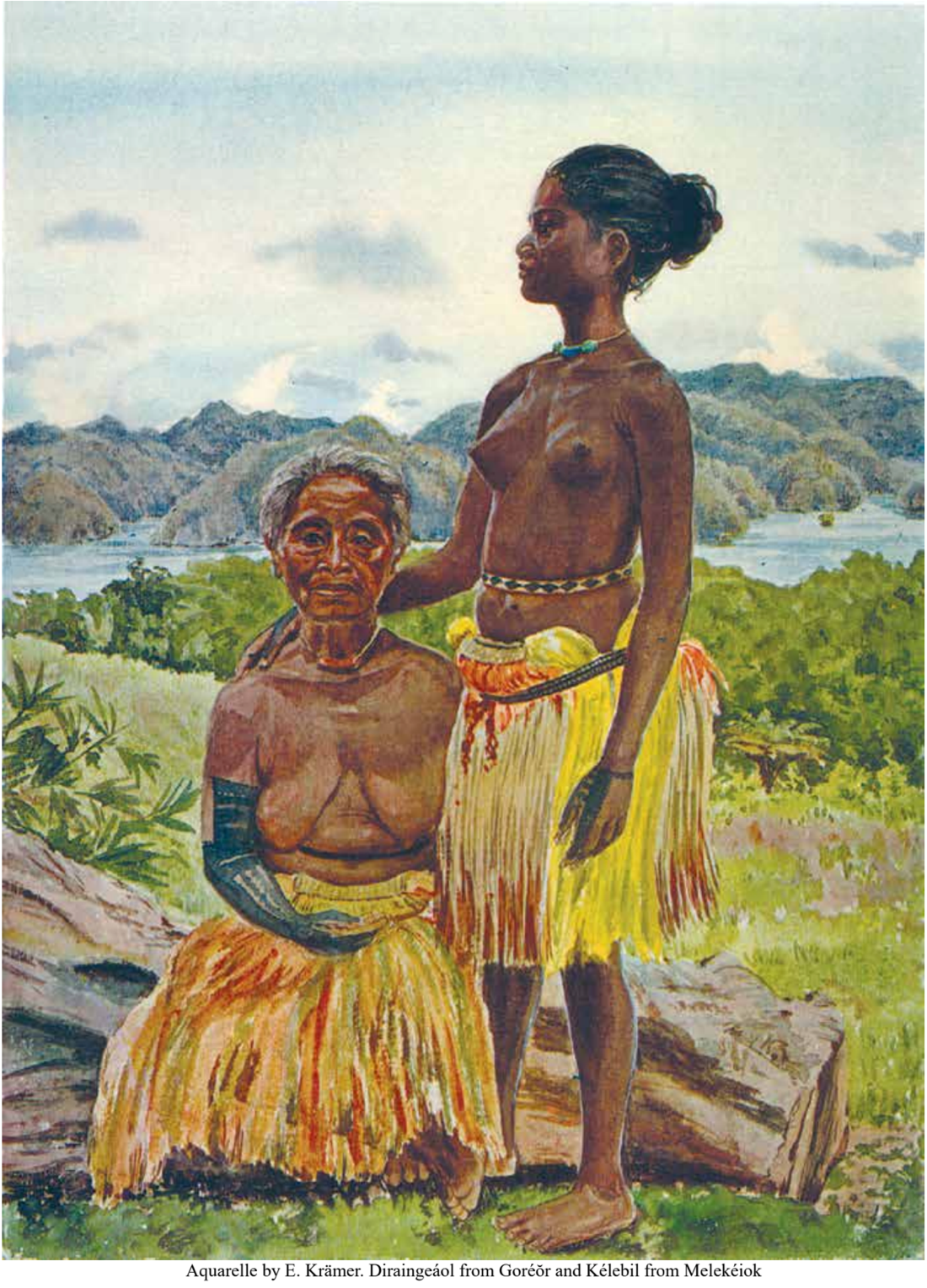
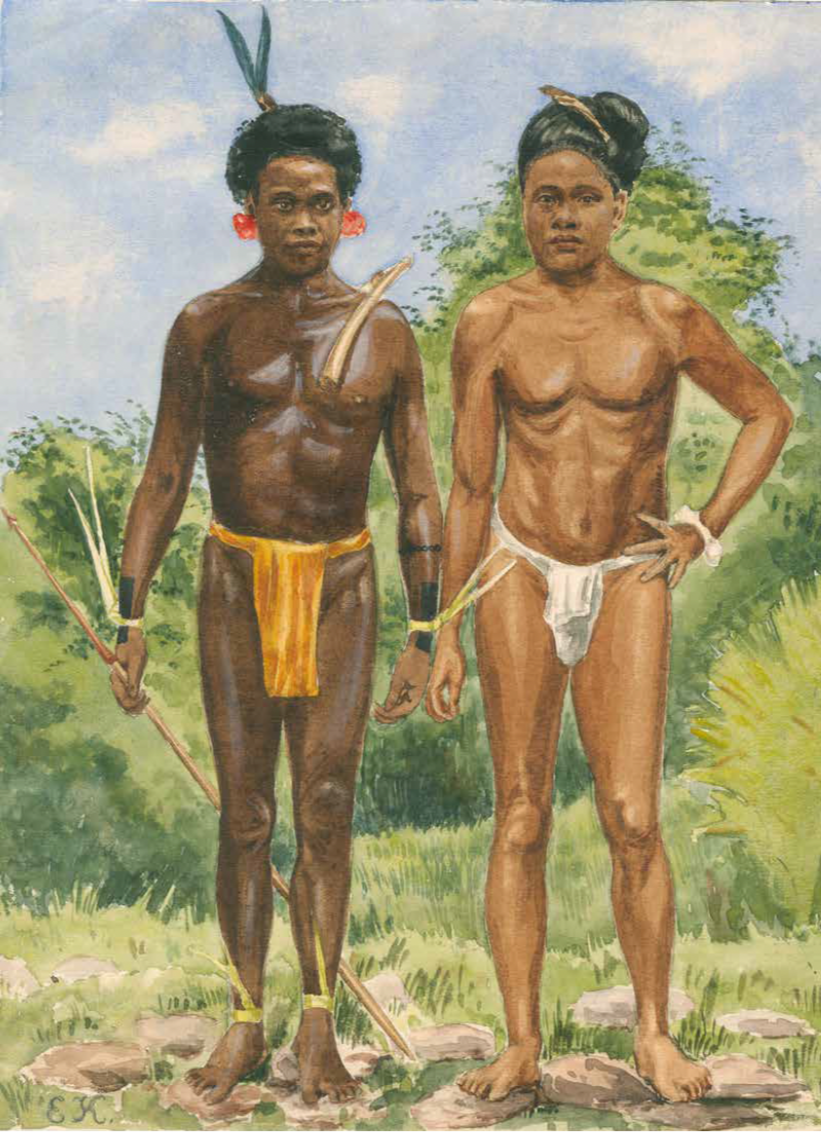
Watercolor paintings by Elizabeth Kramer of the 1908-1910 South sea expedition
MEN
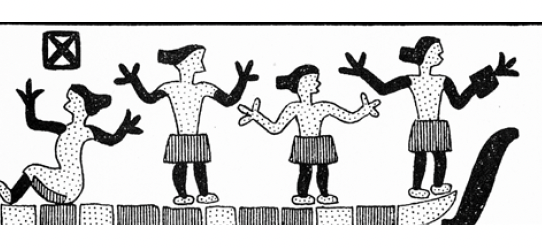
While Palau may be known for its rich history of tattooed women, men were also heavily decorated. Markings can largely be considered a visual indicator of someone’s connection or membership within the community. There are fewer recorded accounts regarding the approach to men’s tattoos, though accounts generally share that men’s tattoos were approached similarly to women’s. Young boys would begin receiving tattoos first on the fingers, around the age of 7 or 8. Similar to women, it would then move upwards from the hand to the arm, though they stopped before the elbow. Any tattoos located above the elbow on a man may have been located on the outer arm, shoulder, or chest. Tattoos higher on the body may have been reserved for higher ranking individuals or those in positions of high authority within war.
As for their legs, similarly to women they would begin at the back of the leg near the foot then work upwards. However it does seem that men were more frequently tattooed on the front of their legs than women, and that men’s tattoos were more concentrated toward the lower body. Similar blacking out of the buttocks was likely desired.
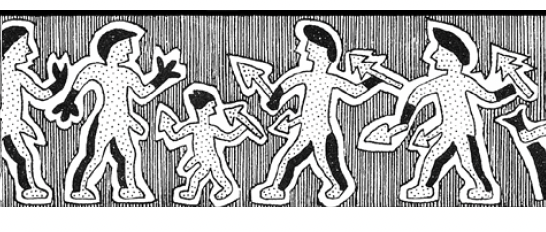
Paintings from a Bai depicting tattoo placements by sex.
Revivalism
There are many amazing folks working on reviving pre-colonial practices within their own cultures and communities. Skin marking is just one tradition where these efforts are being spent.
If you are interested in learning more about tattoo revival, I highly recommend looking into published works and podcasts with revivalists such as Dion Kazsas and Su’a Sulu’Ape Aisea.